|
 |
|||||||||||||||||










|
|

|
Fitness
Block knocks: Demystifying head injuries and concussionSaturday November 01 2003
This week, in his exclusive column for ProSport and Planet Rugby, Saracens physiotherapist Nigel Roe (pictured) writes about concussion - dealing with its exact definition, the after-effects and the standard three-week stand-down period. It's the most worrying injury for a medical team on the rugby sidelines & a player takes a big head knock and goes down for the count. They don't come more horrific than Canadian captain Al Charron's efforts midweek, and we saw almost as nasty an incident in the very first game of the Rugby World Cup, with Australian lock David Giffin taking a nasty fall from a re-start directly onto his head. Head injury, concussed, knocked out or all of the above? What do these terms mean with regard to actual injury and when is it safe for players to return to action? Let's take a closer look at what's involved. We've all seen a few stars before with head knocks while playing, and more than 90 percent of all concussions that are sustained in sports are considered to be 'mild', characterised by no loss of consciousness, temporary confusion and/or a brief duration of post-traumatic amnesia. More serious concussion usually involves one or more of the following symptoms: longer duration memory loss, nausea, headaches, altered vision and actual loss of consciousness. Be clear though that you do not have to be "knocked out" to be concussed. Concussion is formally defined as "a complex pathophysiological process affecting the brain, induced by traumatic biomechanical forces". Translation for us mere mortals: A form of brain injury resulting from the impact of the brain against the side of the skull when the head decelerates rapidly, as in high speed contact with the ground or a another player (the Tongan boys are a particularly bad choice to try and bounce off!). This can result in bruising of the brain surface or it's interior, swelling of brain tissue, and in more serious cases blood vessel rupture and bleeding in the space around the brain. If not picked up, more serious bleeding or brain swelling injury can be fatal. Of great concern too is the so-called "second impact syndrome", where a second head knock within several weeks time frame of an initial concussion can cause rapid onset brain swelling and death. This is the basis for the mandatory stand-down period of three weeks following a head injury. There is some also evidence now that repeated concussions may cause long-term impairments in thinking, even when the concussive blows are relatively minor. So how do we know what head injuries are safe to play on through or to allow to return to play the following week with? Historically this has been a real problem as there has been a lack of accepted standards within rugby and other contact/collision sports on how best to assess, grade and medically manage head injuries involving concussion. Thankfully, things are changing and clear guidelines based on the latest medical evidence have become available within UK through the efforts of Dr Graeme Wilkes, of Newcastle and the RFU Medical team. The RFU guidelines include a simple yet scientifically proven series of tests initially developed in the Aussie Rules code to help in the assessment and management of concussion during and after matches. This system has been successfully implemented at premiership level this season. Under the new system, a club doctor or physiotherapist asks a player suspected of suffering from concussion six questions that, from research in Aussie Rules, is scientifically proven to provide an indication of his health by testing his memory and powers of recall. The new guidelines include a similar, but more detailed supplementary five-minute test, known as the Standardised Assessment of Concussed Players (SAC). The answers will be compared with those given by the player before the start of the season. He will have to match this baseline score in order to be allowed to play again, but only once he has also passed the more demanding CogSport test. Ultimately, Wilkes hopes that the IRB will adopt a 'head-bin', whereby a player undergoes the SAC test before a final decision on his ability to return to play is taken. For the rest of us, one simple guideline makes important reading for the weekend warrior at whatever level. If in doubt, sit it out. No game is worth risking a potentially fatal injury. There isn't space to go into depth here on prevention, management and return to play guidelines here but have a look at this excellent site - www.concussionsafety.com - for some basic details. More detailed information can be found at the CogSport website and in particular the downloadable "Concussion management guidelines": One final note: You may have noticed that International and Premiership players sometimes return before this three-week period, but this is only after documented assessment and investigation by a Neurosurgeon as stipulated by RFU regulations: Take note that Dr Wilkes is adamant that the three-week rule is maintained for players below the elite level. "It has been a good rule because it has provided a safety net for players where scientific and medical support is not available," he said. "Without the sophisticated tests we are doing, I would say it remains unsafe for anyone to return within the three weeks." Fortunately for most of us, we don't have to run into too many Tongans on a regular basis (I used to dread away games in Tonga with the Fiji squad!). Joking aside, even the smallest head knock and resulting concussion at whatever level of play should be treated with the utmost caution. Check out these web sites and make sure you're informed. It's life-saving stuff. Cheers Click here to view a table on all the RWC injuries! ProSport is available at all good UK pharmacies.
 Gullivers Sports Travel offers the best value supporters' tours to Six Nations matches, the Dubai Sevens, Rugby World Cup Sevens and, the summit of rugby, the British & Irish Lions' Tour to New Zealand. Plus tours for clubs and schools. For more information, visit Gulliversports.co.uk Gullivers Sports Travel offers the best value supporters' tours to Six Nations matches, the Dubai Sevens, Rugby World Cup Sevens and, the summit of rugby, the British & Irish Lions' Tour to New Zealand. Plus tours for clubs and schools. For more information, visit Gulliversports.co.uk |
|
|
 www.prosportworld.com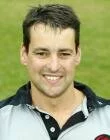
 Discuss on the Message Board
 Mail this to a Friend
 Prepare article for printer
 |
| Terms & Conditions | Privacy Policy | Copyright | Advertise with us | |
|
|
|
Part of the TEAMtalk Media Group Network SportingLife.com - TEAMtalk.com - Bettingzone.co.uk - sportal.comFootball365.com - Rivals.net - Golf365.com - Cricket365.com - TShirts365.com Planet-Rugby.com - Planet-F1.com - MobileLounge.co.uk - ExtremeSports365 Sports Broadband Service - ConferenceFootball.tv - Fantasy-Manager - Sports.co.uk Oddschecker.com - totalbet.com - totalbetCasino.co.uk - totalbetPoker.co.uk ukbetting.com - Casino-Checker.com - ukbetting Casino - ukbettingPoker.co.uk HotelNewspapers.com |